

Colossians 3:1-13
- Colossians 3:1-4
- So if you have been raised with Christ, seek the things above, where Christ is, seated at the right hand of God. 2 Set your minds on things above, not on earthly things. 3 For you died, and your life is hidden with Christ in God. 4 When Christ, who is your life, appears, then you also will appear with him in glory.
- The point Paul is making here is this. In baptism, Christians die and rise again. As the water closes over them, it is as if they were buried in death; as they emerge from the water, it is like being resurrected to a new life
- Christians must rise from baptism as different people. Their thoughts must be set on the things which are above. They can no longer be concerned with the trivial passing things of earth; they must be totally concerned with the eternal truths of heaven
- Paul is certainly not pleading for an other-worldliness in which Christians withdraw from all the work and activities of this world and do nothing but contemplate eternity
- Immediately after this, Paul goes on to lay down a series of ethical principles which make it quite clear that h expects Christians to go on with the work of this world and to maintain all its normal relationships
- But there will be this difference—from now on, Christians will view everything against the background of eternity and no longer live as if this world was all that mattered
- This will obviously provide a new set of values. Christian will no longer worry about things which the world thought important
- Ambitions which dominated the world will be powerless to touch them. They will go on using the things of the world, but they will use them in a new way
- They will set giving above getting, serving above ruling, forgiving above avenging. The standard of values for Christians will be God’s, not the world’s
- And how is this to be accomplished? The Christian life is hidden with Christ in God. There are at least two pictures here
- Christians regard baptism as a dying and rising again
- When someone was dead and buried, the Greeks very commonly spoke of that person as being hidden in the earth; but Christians had died a spiritual death in baptism, and they are not hidden in the earth but hidden in Christ. It was the experience of the early Christians that they very act of baptism wrapped them round with Christ
- There may well be a word-play here which a Greek would recognize at once
- The false teachers called their books of so-called wisdom apokruphoi, the books that were hidden from all except from those who were initiated. Now the word which Paul uses to say that our lives are hidden with Chris in God is part of the verb apokruptein, from which the adjective apokruphos comes
- Undoubtedly, the one word would suggest the other. It is as if Paul said; “For you, the treasures of wisdom are hidden tin your secret books; for us, Christ is the treasury of wisdom, and we are hidden in Him”
- Christians regard baptism as a dying and rising again
- There is still another idea here. The life of every Christian is hidden with Christ in God
- That which is hidden is concealed; the world cannot recognize Christians. But Paul goes on; “The day is coming when Christ will return in glory—and then the Christians, whom no one recognized, will share that glory, and it will be plain for all to see.”
- In a sense Paul is saying that some day the verdicts of eternity will reverse the verdicts of time, and the judgements of God will overturn the judgements of this world
- In verse 4, Paul gives to Christ one of the great titles of devotion
- When Christ, who is your life…Here is an idea which was very dear to Paul’s heart
- To the Philippians he, he said “For me, to live is Christ” (1:21); Years before, when he was writing to the Galatians, he said “I have been crucified with Christ, and I no longer live, but Christ lives in me.” (2:20)
- As Paul saw it, Christ is the most important thing in life; more, He is life. For Christians, Christ is their life
- And here we come back to where this passage started—that is precisely why Christians set their minds and hearts on the things which are above and not on the things of this world. They judge everything in the light of the cross and in the light of the love which gave itself for them. In the light of that cross, the world’s wealth, ambitions, and activities are seen at their true value—and Christians are enabled to set their hearts on the things which are above
- Colossians 3:5-9a
- 5 Therefore, put to death what belongs to your earthly nature: sexual immorality, impurity, lust, evil desire, and greed, which is idolatry. 6 Because of these, God’s wrath is coming upon the disobedient, 7 and you once walked in these things when you were living in them. 8 But now, put away all the following: anger, wrath, malice, slander, and filthy language from your mouth. 9 Do not lie to one another,
- Here, this letter makes the change that Paul’s letters always make; after the theology comes the ethical demand. Paul could think more deeply than anyone who ever tired to express the Christian faith; But always at the end of his letters he turns to the practical consequences of it all. He always ends with an uncompromising and crystal-clear statement of the ethical demands of Christianity in the situation in which his friends are at the moment
- Paul begins with a vivid demand
- Put to death what belongs to your earthy nature. He uses the same line of thought in Romans 8:13 “because if you live according to the flesh, you are going to die. But if by the Spirit you put to death the deeds of the body, you will live.”
- It is exactly the same line of thought as that of Jesus when He demanded that people should cut off a hand, foot, or tear out an eye when it was leading them into sin
- Christians must kill self-centeredness and regard as dead all private desires and ambitions. In their lives, there must be a radical transformation of the will and a radical shift of the center. Everything which would keep them from fully obeying God and fully surrendering to Christ must be surgically removed
- Paul goes on to list some of the things which the Colossians must cut right out of life
- Sexual immorality and impurity must go
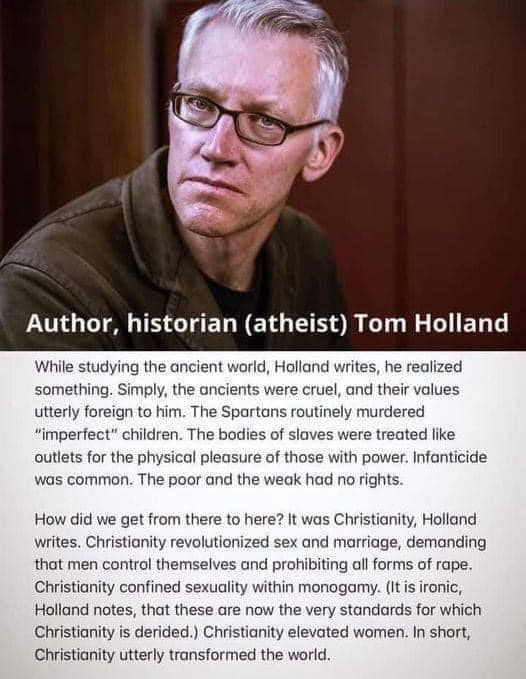
- Chastity was the one completely new virtue which Christianity brought into the world. In the ancient world, sexual relationships before marriage and outside of marriage were the norm and accepted practice. The sexual appetite was regarded as a thing to be gratified, not to be controlled. That is an attitude which is not unfamiliar today
- The Christians ethic insists on chastity, regarding the physical relationships between the sexes as something so precious that indiscriminate use of it in the end spoils it
- There is lust and evil desire
- There is a kind of person who is the slave of passions and who is driven by the desire for the wrong things
- There is greed
- Pleonexia is one of the ugliest sins; but, while it is quite clear what it means, it is hard to find a single word to translate it. It comes from two Greek words; The first half of the word is from pleon which means more, and the second half of the word is from echein, which means to have
- It is basically the desire to have more. The Greeks defined it as the desire which cannot be satisfied, and said that you might as easily satisfy it as you might fill with water a bowl that has a hole in it. They defined it as the sinful desire for what belongs to others
- It has been described as ruthless self-seeking. Its basic idea is the desire for that which we have no right to have. It is a sin with a very wide range
- If it is the desire for money, it leads to theft. If it is the desire for prestige, it leads to evil ambition. If if is the desire for power, it leads to sadistic tyranny. If it is the desire for a person, it leads to sexual sin. It is the opposite of the desire to give
- Paul calls such a desire idolatry
- The essence of idolatry is the desire to get. People set up idols and worship them because they desire to get something from them. Idolatry is an attempt to use God for man’s purposes, rather than to give oneself to God’s service. The essence of idolatry is the desire to have more
- Those whose lives are dominated by the desire to get things have set up material possessions in the place of God—and that precisely is idolatry
- Sexual immorality and impurity must go
- Upon all such things the wrath of God must fall The wrath of God is simply the rule of the universe that we will reap what we sow and that no one ever escapes the consequences of sin. The wrath of God and the moral order of the universe are one and the same thing
- In verse 8, Paul says that there are certain things the Colossians must put away
- The word he uses is the word for taking off clothes. There is a picture from the life of the early Christians. When they were baptized, they took off their old clothes when they went down into the water, and when they emerged they put on new, pure white robes
- They got rid of one kind of life and put on another. In this passage, Paul speaks of the things of which Christians must rid themselves, and in verse 12 he will continue the picture and speak of the things which Christians must put on
- Let’s look at these things one by one
- Anger and wrath
- There are two words here, and the difference is this. One is a blaze of sudden anger, which is quickly ignited and just as quickly dies. The Greeks likened it to a fire in straw, which quickly blazed and just as quickly burned out
- There is anger which has become engrained; it is long lasting, slow burning anger, which refuses to be pacified and nurses its wrath to keep it warm
- For Christians, the burst of wrath and the long-lasting anger are both forbidden
- There is malice
- It really means that viciousness of mind from which all the individual vices spring. It is all-pervading evil
- There is slander and filthy language
- The word for slander mans insulting and slanderous speaking in general. In this context, it is slanderous talk against other people
- The word for filthy language could well mean obscene language
- Anger and wrath
- The last three forbidden things all have to do with speech. And when we turn them into positive commands instead of negative prohibitions, we find three laws for Christian speech
- Christian speech must be kind
- All slanderous and malicious talk is forbidden. The old advice still stands which says that before we repeat anything about anyone, we should ask three questions. “Is it true? Is it necessary? Is it kind?” The NT is unsparing in its condemnation of gossiping tongues which poison truth
- Christian speech must be pure
- Christians should never forget that they will give an account for every idle word they speak
- Christian speech must be true
- It is easy to distort the truth; an alteration in the tone of voice or a meaningful look can do it; and there are silences which can be as false and misleading as any words
- Christin speech must be kind, pure, and hones to everyone everywhere
- Christian speech must be kind
- Colossians 3:9b-13
- since you have put off the old self with its practices 10 and have put on the new self. You are being renewed in knowledge according to the image of your Creator. 11 In Christ there is not Greek and Jew, circumcision and uncircumcision, barbarian, Scythian, slave and free; but Christ is all and in all. 12 Therefore, as God’s chosen ones, holy and dearly loved, put on compassion, kindness, humility, gentleness, and patience, 13 bearing with one another and forgiving one another if anyone has a grievance against another. Just as the Lord has forgiven you, so you are also to forgive.
- When people become Christians, there should be a a complete change in their personalities (can’t expect it to be overnight). They leave the old self and put on a new self, just as the those baptized removed their old clothes and put on the new white robes. We very often evade the truth in which the NT insists that a Christianity which does not change people must be regarded as imperfect
- Further, this change is progressive. This new creation is a continual renewal. It makes people grow continually in grace and knowledge until they reach what they were meant to be—full humanity in the image of God
- One of the great effects of Christianity is that it destroys the barriers. In it there is neither Greek nor Jew, circumcised or uncircumcised, barbarian, Scythian, slave nor free
- The ancient world was full of barriers. The Greeks looked down on the barbarian; and to the Greeks anyone who did not speak Greek was a barbarian, which literally means someone who says “bar-bar”. The Greeks were the aristocrats of the ancient world, and they knew it
- The Jews looked down on every other nation. They belonged to God’s chosen people, and the other nations were only fit to be fuel for the fires of hell
- The Scythians were notorious as the lowest of the barbarians; more barbarian than the barbarians, the Greeks called them; Scythians were little short of wild animals. The Jewish historian Josephus speaks of them as being proverbially savages, who terrorized the civilized world with their bestial atrocities
- Slaves were not even classified in ancient law as human beings; they were merely living tools, with no rights of their own Their masters could beat, brand, maim, or even kill them at a whim; they didn’t even have the right of marriage. There could be no fellowships in the ancient world between slaves and those who were free
- In Christ, all these barriers were broken down
- It destroyed the barriers which came from birth and nationality
- Different nations, who either despised or hated each other, were drawn into the one family of the Christian Church. People of different nationalities, who would have leaped at each other’s throats, sat in peace beside each other at the Lord’s table
- It destroyed the barriers which came from ceremony and ritual
- Circumcised and uncircumcised were drawn together in the one fellowship. To the Jews, people of any other nation were unclean; when men and women became Christians, every man or woman of every nation became a brother or sister
- It destroyed the barriers between the cultured and the uncultured
- The Scythians were the ignorant barbarians of the ancient world; the Greeks were the aristocrats of learning. The uncultured and the cultured came together in the the Christian Church. The greatest scholar in the world and the humblest laborer can sit in perfect fellowship in the Church
- It destroyed the barrier between class and class
- Both slaves and free came together in the Church. More than that, in the early Church, it could, and did, happen that a slave was the leader of the church, and the master was the humble church member. In the presence of God, the social distinctions of the world become irrelevant
- It destroyed the barriers which came from birth and nationality
- Paul moves on to give his list of the great graces with which the Colossians must clothe themselves. We must note two very significant things
- Paul begins by addressing the Colossians as “God’s chosen ones, holy and dearly loved”
- The significant thing is that every one of these originally belonged to the Jews. They were the chosen people; they were the holy nation; they were the beloved of God
- Paul takes these three designations and gives them to the Gentiles. Thereby he shows that God’s love and grace have gone out to the ends of the earth, and that there is no “most favored nation” in His plan
- It I significant to note that every one of the graces listed has to do with personal relationships between individuals
- The great basic Christian virtues are those which govern human relationships. Christianity is community. It has on its divine side the amazing gift of peace with God, and on its human side the triumphant solution of the problem of living together
- Paul begins by addressing the Colossians as “God’s chosen ones, holy and dearly loved”
- Paul begins with compassion
- If there was one thing the ancient world needed it was mercy. Christianity brought mercy into this world. It is not too much to say that everything that has been done for the elderly, the sick, the weak in body and mind, animals, children, and women has been done through the inspiration of Christianity
- There is kindness
- The ancient writers defined it as the virtue of those whose neighbors’ good is as dear to them as their own. It is the word used when Jesus said “My yoke is easy”. Goodness by itself can be stern; but this is the goodness which is kind, that type of goodness which Jesus used to the sinning woman who anointed His feet. Christians are marked by a goodness which is kind
- There is humility
- It has often been said that humility was a virtue created by Christianity. In classical Greek, there is no word of humility which does not have some suggestion of servility; but Christian humility carries no sense of cringing in submission. It is based on two things
- First, on the divine side, it is based on the awareness of the creatureliness of humanity. God is the Creator, men and women are the creatures, and in the presence of the Creator the creatures cannot feel anything but humility
- Second, on the human side, it is based on the belief that we are all children of God; and there is no room for arrogance when we are living among men and women who are all of royal lineage
- It has often been said that humility was a virtue created by Christianity. In classical Greek, there is no word of humility which does not have some suggestion of servility; but Christian humility carries no sense of cringing in submission. It is based on two things
- There is gentleness
- Long ago, Aristotle had defined this as the happy mid-point between too much and too little anger. The person who has gentleness is someone who is so self-controlled, because of being God-controlled, that anger is always expressed at the right time and never at the wrong time. Such a person has at one and the same time the strength and the sweetness of true gentleness
- There is patience
- This is the spirit which never loses its patience with others. Their foolishness and their unteachability never drive it to cynicism or despair; their insults and their ill-treatment never drive it to bitterness or wrath. Human patience is a reflection of the divine patience which tolerates all our sinning and never casts us off
- There is bearing with one another and forgiving
- Christians bear with and forgive; and they do so because those who have been forgiven must always be forgiving. As God forgive them, so they must forgive others, for only the forgiving can be forgiven

 Thoughts from a Crosseyed Jesus Freak